Tenant Buyout Disclosure Laws in Los Angeles: What Landlords Must Do Before Offering Cash for Keys
By Paul Adams |
Tenant Buyout Disclosure Laws in Los Angeles: What Landlords Must Do Before Offering Cash for Keys Written by ...
Read Article 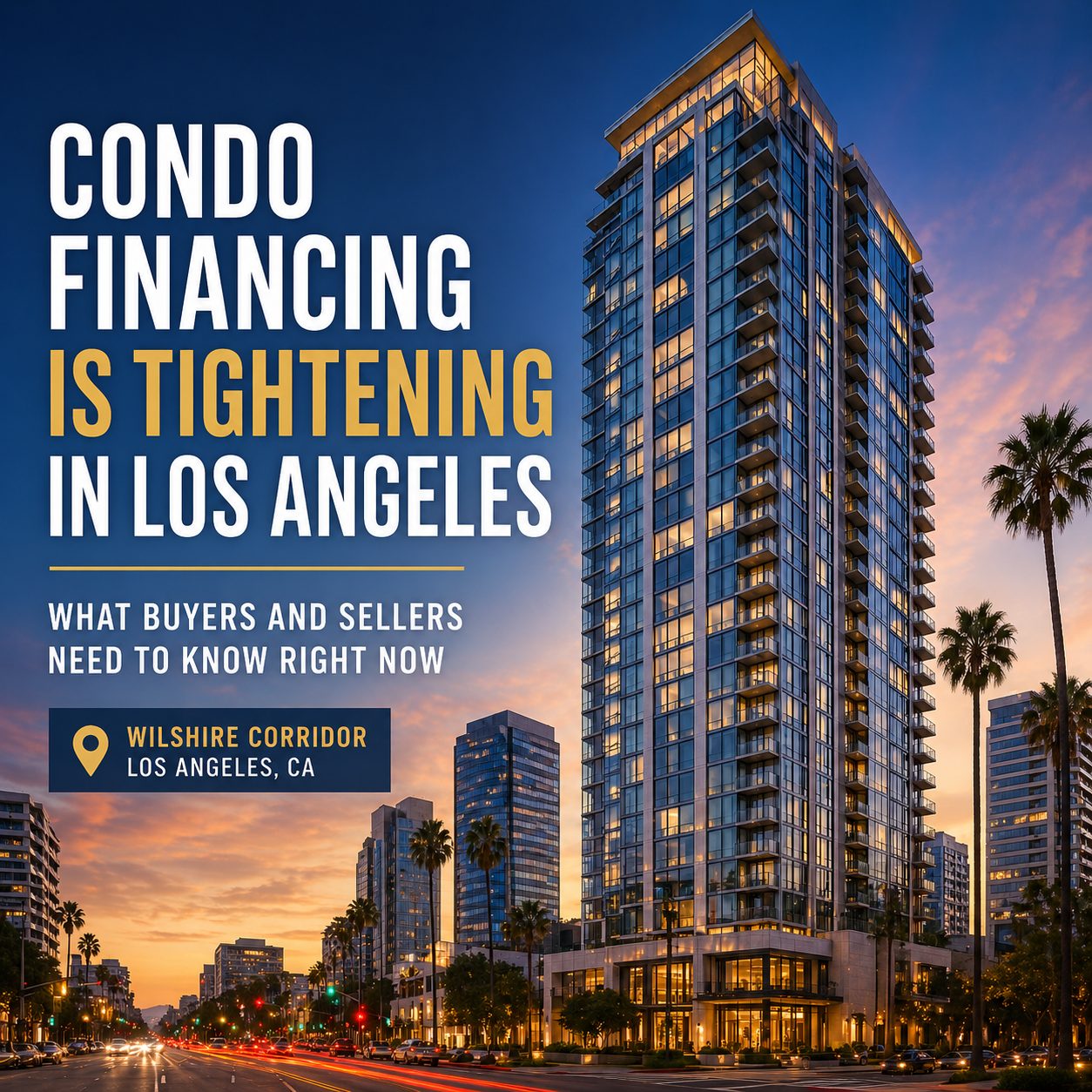
Written by Paul Adams II
Los Angeles Real Estate Advisor
Most buyers think getting pre-approved means they’re ready to buy any condo.
That assumption is where deals start to fall apart.
Because right now in Los Angeles, the biggest shift in condo transactions is not the buyer.
It’s the building.
And if you don’t understand how lenders are looking at condos today, you can go from “fully approved” to “deal dead” in the middle of escrow.
In Los Angeles, I’m seeing more condo deals fall apart due to HOA and financing issues than buyer qualification itself.
A few years ago, if a buyer had strong income, good credit, and a reasonable down payment, most condo purchases moved forward without major friction.
That is no longer the case.
Today, lenders are underwriting two separate risks:
What this actually means in practice is that you can be fully qualified and still get denied because the HOA, financials, or structure of the building does not meet lending guidelines.
This shift is part of a broader change in how buyers need to approach purchasing in Los Angeles. If you're still getting clear on the overall process, it helps to start with How to Buy a House in Los Angeles so you understand how financing, property selection, and strategy all connect.
I recently had a buyer go under contract on a condo in Brentwood. Strong profile. Clean file. Then underwriting flagged:
The loan didn’t immediately die, but it changed:
Financing is no longer just about you qualifying. It’s about the building qualifying.
Understanding the financial side of a purchase is critical. If you're still mapping out your numbers, How Much Do You Need to Buy a House in Los Angeles? breaks down what buyers should realistically expect before entering the market.
A warrantable condo meets standard lending guidelines. A non-warrantable condo does not.
Common red flags include low reserves, high delinquencies, too many rentals, litigation, and insurance issues.
What this actually means in practice is that your buyer pool shrinks immediately.
Two condos in Studio City, same price, same neighborhood. One sells quickly. The other sits. The difference is not the unit. It’s financing.
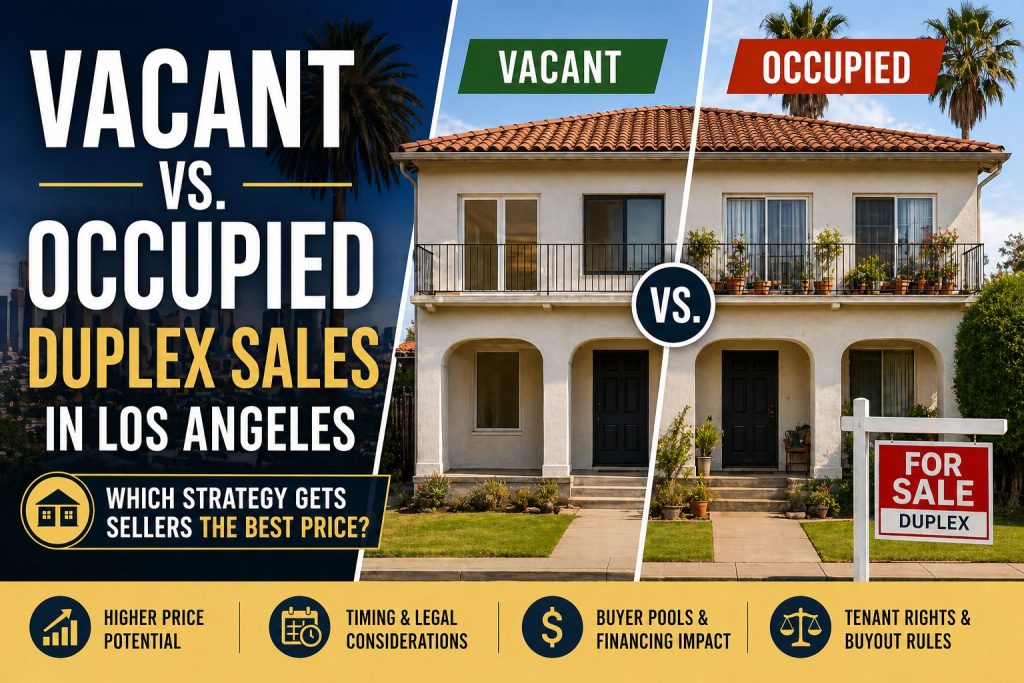
This is similar to what happens across different property types. For example, small multifamily properties behave very differently depending on how they are positioned and delivered. I break that down in Vacant vs Occupied Duplex Sales in Los Angeles.
Buyers are still approaching condos like they did a few years ago. That’s the problem.
You get pre-approved. You go under contract. Then the lender reviews the HOA. That’s where everything can shift.
In Sherman Oaks, a deal recently hit issues due to low reserves, upcoming roof replacement, and insurance gaps.
The risk shows up late, but it starts early.
Before writing an offer, ask:
You are not just buying a unit. You are underwriting a building.
This is where deals get expensive.
Buyer goes under contract. Inspections happen. Lender reviews HOA. Red flags appear.
Now the buyer may need to switch lenders, bring more cash, renegotiate, or walk away.
The strongest offers are not the highest. They are the ones most likely to close.
This becomes especially important in competitive situations. If you're navigating multiple-offer scenarios, How to Win a Bidding War in Los Angeles Without Overpaying breaks down how to stay competitive without taking unnecessary risk.
If your building has financing issues, fewer buyers qualify, more deals fall apart, and pricing pressure increases.
In some cases, sellers look at repositioning a property before listing. That can involve tenant strategy and legal considerations. If you're exploring that route, Tenant Buyout Disclosure Laws in Los Angeles is the next article to understand the rules and risks.
Buyers don’t just ask “Do I like this?” They ask “Can I close this?”
Financing is not collapsing. It’s becoming selective.
Right now in Los Angeles, buyers are not losing deals because they can’t qualify. They’re losing deals because the building doesn’t.
If you want to understand which condo buildings are easiest to finance before you write offers or list your property, I can help you identify the opportunities most likely to close smoothly.
Condo financing is getting harder in Los Angeles because lenders are now evaluating the financial health of the HOA, insurance coverage, and building risk, not just the buyer. Issues like low reserves, high delinquency rates, or pending litigation can cause loan denials even if the buyer is fully qualified.
A non-warrantable condo is a unit in a building that does not meet standard lending guidelines. This can happen if the HOA has low reserves, too many rental units, high owner delinquencies, or legal issues. Non-warrantable condos are harder to finance and often require larger down payments or alternative lenders.
HOA reserves play a major role in condo financing because they indicate the financial stability of the building. Most lenders prefer reserves to be at least around 10% of the annual budget. If reserves are too low, lenders may deny the loan or impose stricter terms, which can reduce buyer demand.
Yes, it is still possible to get a loan for a condo with HOA issues, but options are more limited. Buyers may need to use non-traditional lenders, put more money down, or accept higher interest rates. In some cases, financing may not be available at all, depending on the severity of the issue.
Yes, condo financing issues can significantly impact property value in Los Angeles. When fewer buyers are able to get approved for a building, demand decreases, which can lead to longer time on market and lower sale prices compared to similar units in stronger, financeable buildings.



Paul Adams II | CA DRE# 02232552
Coldwell Banker Residential Brokerage Company | CA DRE# 00616212
The property information herein is derived from various sources that may include, but not be limited to, county records and the Multiple Listing Service, and it may include approximations. Although the information is believed to be accurate, it is not warranted and you should not rely upon it without personal verification. Affiliated real estate agents are independent contractor sales associates, not employees. ©2026 Coldwell Banker. All Rights Reserved. Coldwell Banker and the Coldwell Banker logo are trademarks of Coldwell Banker Real Estate LLC. The Coldwell Banker® System is comprised of company owned offices which are owned by a subsidiary of Anywhere Advisors LLC and franchised offices which are independently owned and operated. The Coldwell Banker System fully supports the principles of the Fair Housing Act and the Equal Opportunity Act.